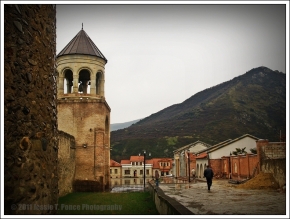
It’s Warm and Easy in Tbilisi (Re-post from Feb 2012)
I started A Traveler’s Tale in July 2011. As a new blogger in WordPress, not too many knew about this site yet and I was still struggling to understand how to best position… Continue reading

A seemingly unearthly sight of a living human head ethereally suspended, almost separated, from the body by a pile of brass rings — a sight that I once naively thought could only belong… Continue reading

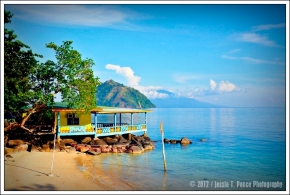
Myanmar, December 2016: Tucked at the southernmost tip of the Ayeyarwady Region of Myanmar, at the point where the mystic currents of the Andaman Sea meet the glorious tides of the Bay of… Continue reading

I started A Traveler’s Tale in July 2011. As a new blogger in WordPress, not too many knew about this site yet and I was still struggling to understand how to best position… Continue reading
A photo essay about the cycle of life and nature in the Mongolian steppes
Jessie T. Ponce’s photo coverage of the 2015 Goroka Show
Papua New Guinea, 11 September 2015: After three years of coming in and out of Papua New Guinea, I was finally able to grab a chance and squeeze into the busy work schedule,… Continue reading
A photo essay about how a group of village women struggle daily to collect water that is not even fit for domestic use.
Central Province, Papua New Guinea / November 2013: I consider myself open-minded and adventurous when it comes to exotic foods and delicacies and I try my best to respect and appreciate what locals… Continue reading
The Buka Passage is a narrow, deep and very fast flowing tidal channel that separates Buka Island by around 200 meters from the main island of Bougainville. Our home island for the week, the small but scenic Sohano… Continue reading
To somebody who watches documentary films, the name Bougainville may ring a bell. At least two multi-awarded documentaries were made about this obscure island in the Pacific; The Coconut Revolution and Bougainville – Our Island… Continue reading
They call them “Ger Kindergarten”. Yes, they are right in the middle of nowhere and yet they are fully functional, some with as many as 20 kids in the enrollment list. The name… Continue reading
September 2012. The last time I visited Mongolia was in Autumn of 2009. Back then, the Mongolian economy has been enjoying rapid growth mainly spurred by a boom in mining but was facing… Continue reading
“May 13, 1871, 6:00 p.m. Cotta Bato, the capital of Camiguin Island, was a quiet and attractive town, verdant in its natural wonders. Its peaceful shores provided strolling grounds for its inhabitants as… Continue reading
What About Port Moresby? Having posted dozens of photos about Papua New Guinea, I was just waiting for one of the readers to ask something like, “What about Port Moresby, what can you… Continue reading
Stranded in Daru Island in the Western Province of Papua New Guinea (see Daru Island 1); I made use of most of my free time photographing the view from my hotel’s main balcony and observing… Continue reading
River of Life I spent most of my recent Papua New Guinea trip in the Western Province where the lives of almost the whole population revolve around the mighty Fly River. “The Fly”, which flows mostly through the… Continue reading
Two Rivers Also along the banks of Mtkvari (Kura) River, at the point where it is joined by the Aragvi river, is the scenic medieval town of Mtskheta. Located just 20 kilometres (about a half-hour drive) north of Georgia’s… Continue reading
NO, the above photo is not a scene from one of those “Alien” movies; the men are not worshiping something in the skies but are swinging something in their hands; and that black… Continue reading
I had an opportunity to help undertake relief and rehabilitation work in Aceh in 2006, more than one year after the Indian Ocean Tsunami devastated the place. As usual, I always had a… Continue reading
Green 6: Bamboo Grove. Bamboos are an important part of the life in rural villages in Southeast Asia. In these areas, bamboos comprise most of the materials used to construct houses and other… Continue reading
A stunning sunset over the clouds
Green 5: A Rural Scene. The most familiar rural scenery in Southeast Asia would often comprise of vast rice fields, a thatch house and brook or a stream gurgling past it. Paintings of… Continue reading
An amazing sunset taken some 35,000 feet above the earth
Green 4: Dry. I imagine these manual water pumps on their glory days when they were the star of the daily village life — men, women and children queuing in front of these… Continue reading
A series of sunset photos taken above the clouds
Green 3: Water Pond: Open, unprotected water ponds, such as the one in the photo, is the main source of domestic water supply among many rural villages in Southeast Asia. The pond is… Continue reading
Green 2: By the River Palms. This type of palm is popular in many parts of Southeast Asia, especially those lined by the Mekong River and its tributaries, mainly because their fronds provide… Continue reading
I chose this image of a lonesome egret to start a short series entitled, “Green”. My choice of the title is more in line with green as the main color and the overall… Continue reading
I love taking photos of local village markets because they provide a snapshot of the life in the village; how villagers make a living, what they eat, what they wear, how they are… Continue reading